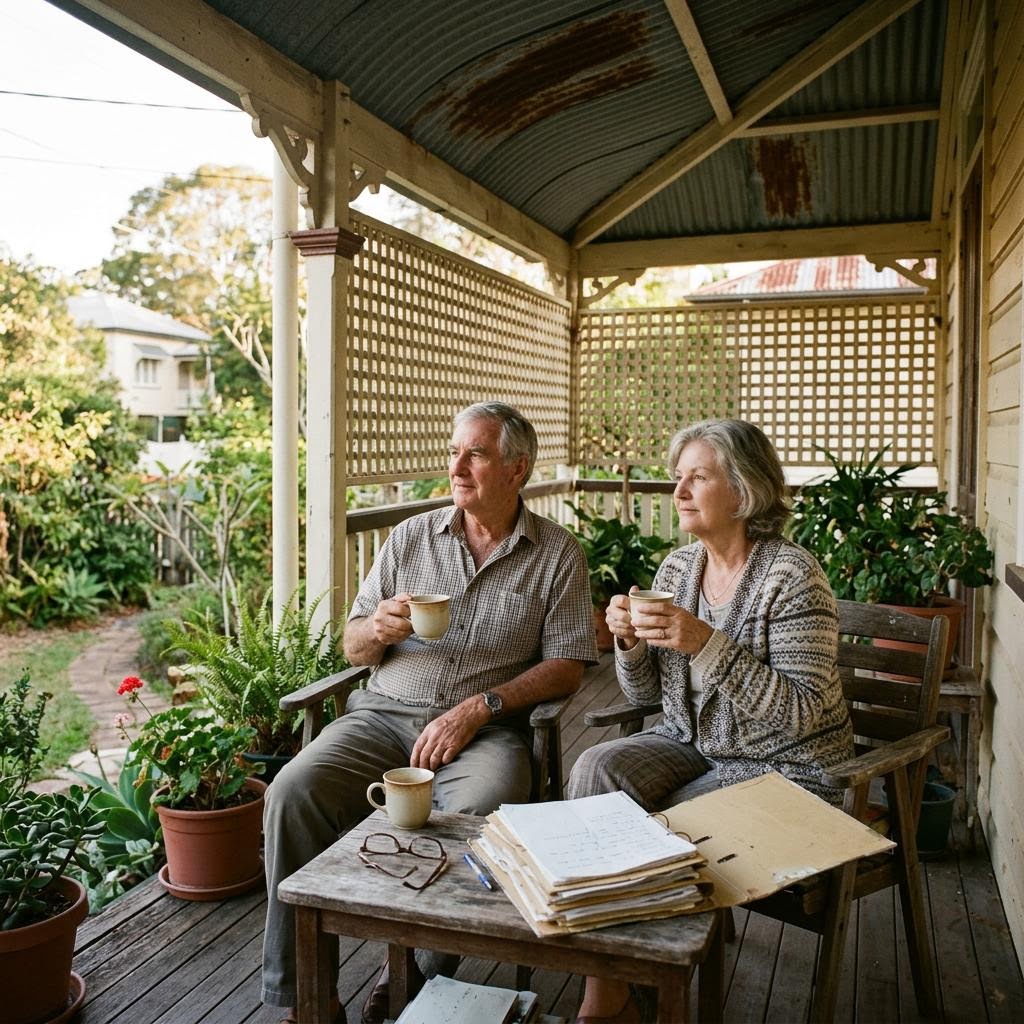
Based on a real discussion shared online by a family whose mother considered using a reverse mortgage to financially assist her children during her lifetime. Some personal details have been simplified while preserving the circumstances described.
The Story
When Mum called a family meeting, everyone assumed it was about her retirement.
Instead, she surprised them.
"I've been thinking about helping you with house deposits."
The room fell silent.
Her children immediately pushed back.
"You need to look after yourself first."
"We don't want you borrowing money for us."
Mum smiled.
"This isn't about sacrificing my retirement."
She explained that most of her wealth was tied up in her home. She had enough income to cover her day-to-day living expenses, but very little cash available.
Watching her children struggle to buy homes while she sat on substantial home equity didn't feel right to her.
Someone mentioned a reverse mortgage as one possible way to access part of that equity.
Before making any decisions, the family searched online to see whether anyone else had faced a similar situation.
What Actually Happened
The discussion produced a wide range of perspectives.
Some contributors said their parents had successfully used home equity to provide financial assistance while remaining comfortably in their own home.
Others urged caution, explaining that retirement funding should remain the first priority and that future health or care needs could change unexpectedly.
Several commenters encouraged the family to think beyond the immediate gift.
How might the decision affect Mum's financial flexibility in ten or fifteen years?
Would she still have sufficient equity if her circumstances changed?
The discussion wasn't about whether helping family was good or bad.
It was about balancing generosity with long-term security.
Original discussion:
https://www.reddit.com/r/personalfinance/comments/1a9h5d9/reverse_mortgage_to_help_children/
Why They Made That Choice
Mum wasn't motivated by investment returns.
She wanted to see her family benefit while she was still alive.
Rather than leaving everything through her estate, she wondered whether some assistance today might have a greater impact than a larger inheritance many years later.
Accessing part of the equity in her home appeared to be one possible way of achieving that goal without immediately selling the property.
Lessons Learned
Several themes appeared throughout the discussion.
Different generations often see home equity differently. Parents may view it as a resource they can use during retirement, while children may see it as part of a future inheritance.
Helping family involves trade-offs. Supporting children today may affect the amount of equity available later.
Retirement needs can change unexpectedly. Several contributors encouraged homeowners to consider future healthcare and living costs before making significant financial commitments.
Open family conversations reduce misunderstandings. Discussing motivations and expectations early helped everyone better understand Mum's thinking.
What Other People Thought
The responses reflected thoughtful debate rather than strong disagreement.
Some contributors believed parents should enjoy the wealth they had spent decades building.
Others felt preserving financial flexibility later in retirement should remain the highest priority.
Many agreed on one point.
Whatever decision is made, it is usually easier for families when everyone understands both the reasons for the decision and its potential long-term implications.
How This Compares to Australia
Some Australian homeowners explore reverse mortgages for a variety of purposes, including supplementing retirement income, funding home improvements or, in some cases, providing financial assistance to family members.
Australian reverse mortgages are regulated under the National Consumer Credit Protection framework and eligible loans include a statutory No Negative Equity Guarantee.
Because interest generally compounds over time unless voluntary repayments are made, homeowners often consider how accessing equity today may affect their future financial position before deciding how much, if any, equity to release.
Key Takeaways
Mum's idea wasn't driven by a desire to borrow.
It was driven by a desire to help.
The family quickly realised the conversation wasn't simply about a reverse mortgage.
It was about balancing two important priorities.
Supporting the next generation while ensuring Mum remained financially secure throughout her own retirement.
Finding that balance became far more important than choosing any particular financial product.
Story Snapshot
Location: United States
Source: Reddit
Perspective: Adult children
Stage: Considering a reverse mortgage
Primary reason being considered: Access home equity while remaining in the family home and potentially assist family members financially
Outcome: Unresolved
Biggest concern: Balancing financial support for adult children with preserving retirement security.
Key lesson: Accessing home equity to help family may appeal to some homeowners, but many families believe it is equally important to consider future retirement needs and long-term financial flexibility.
Source