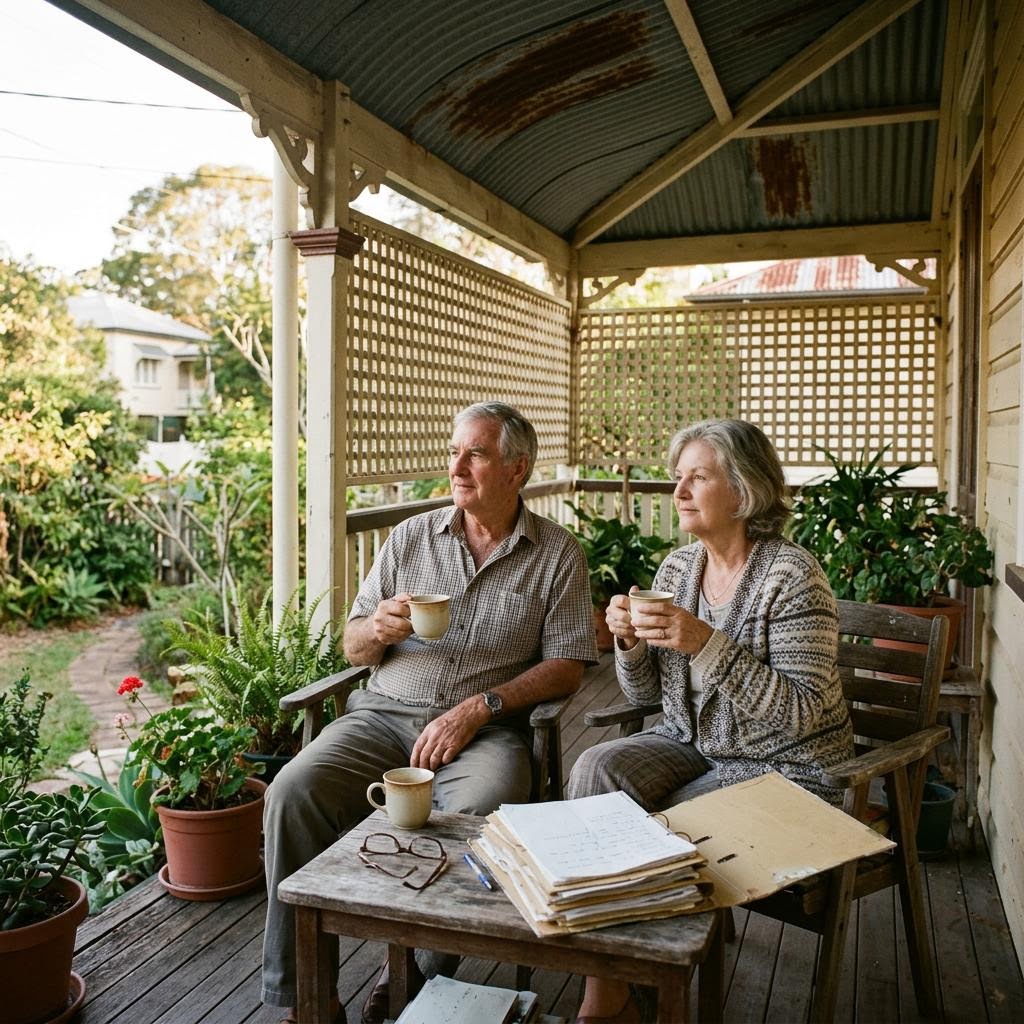
Based on a real Australian reverse mortgage case study. Some personal details have been simplified while preserving the circumstances and outcomes described.
The Story
For decades, the house had been the centre of everything.
It was where Christmas lunch spilled onto the back patio, where the grandchildren raced through the garden, and where neighbours still stopped for a chat over the fence.
By her mid-seventies, however, the home had become both her greatest asset and her biggest financial challenge.
The pension covered the essentials, but only just.
Insurance premiums had climbed. Council rates kept increasing. The roof needed repairs. A new hot water system wasn't far away. Each unexpected bill chipped away at the savings she'd spent a lifetime building.
Her children suggested downsizing.
It made sense on paper.
A smaller home would free up money, reduce maintenance and simplify life.
But every house inspection left her feeling the same way.
She wasn't looking at properties.
She was looking at everything she'd have to leave behind.
Rather than moving, she began exploring another option.
Could she access some of the value tied up in her home without selling it?
What Actually Happened
After speaking with a reverse mortgage specialist and considering her options, she decided to establish a reverse mortgage.
Importantly, she didn't draw down the maximum amount available.
Instead, she accessed only what she needed to complete essential home repairs, create a financial buffer for future expenses and reduce the pressure on her day-to-day budget.
The improvements made the property safer and easier to live in as she grew older.
Just as importantly, she remained in the neighbourhood she knew, close to friends, family and community services.
Her children later described the greatest benefit as peace of mind.
Their mother wasn't worrying about every unexpected expense, and they weren't constantly concerned about how she would pay the next large bill.
Original case study:
https://seniorsfirst.com.au/resources/reverse-mortgage-case-studies/
Why They Made That Choice
This wasn't a decision driven by luxury spending.
It was about preserving independence.
The family considered selling, but the emotional cost of leaving a long-term home outweighed the financial advantages.
The reverse mortgage became a way of converting part of the home's value into accessible funds while allowing her to continue living where she felt comfortable.
For this family, staying connected to familiar neighbours, doctors, shops and routines mattered just as much as the financial outcome.
Lessons Learned
Several themes stand out from this story.
The purpose of the borrowing mattered. The funds were used to solve practical problems rather than dramatically changing the family's lifestyle.
Borrowing less can still achieve the goal. Rather than accessing all available equity immediately, the borrower drew only what she needed at the time.
Ageing in place has value. Remaining in familiar surroundings can provide social, emotional and practical benefits that are difficult to measure financially.
Home maintenance shouldn't be overlooked. Deferred repairs can affect both quality of life and the long-term value of a property.
What Other People Thought
Stories like this often generate balanced discussion.
Some people see the reverse mortgage as an effective way for retirees with substantial home equity but limited cash flow to remain independent.
Others question whether downsizing might preserve more wealth over the long term.
Many families point out that there isn't a single correct answer.
For some homeowners, moving closer to family makes perfect sense.
For others, remaining in a familiar home surrounded by established support networks is the higher priority.
The discussion usually comes back to one question.
What problem is the reverse mortgage actually solving?
How This Compares to Australia
This experience reflects one of the most common uses of reverse mortgages in Australia.
Many borrowers aren't looking to unlock large amounts of money.
Instead, they're trying to bridge the gap between rising living costs and relatively fixed retirement income while remaining in the home they own.
Australian reverse mortgages generally allow borrowers to receive funds as a lump sum, regular payments, a line of credit or a combination of these options, depending on the lender and product.
Australian products are also subject to responsible lending obligations and include a statutory No Negative Equity Guarantee for eligible loans. Even so, interest generally compounds over time, which means the amount owing can increase if no voluntary repayments are made.
Understanding how different drawdown options affect the long-term loan balance is one of the considerations borrowers often explore before proceeding.
Key Takeaways
This story wasn't about chasing a bigger retirement.
It was about protecting an existing one.
The reverse mortgage gave the homeowner flexibility to maintain her property, reduce financial stress and continue living in the place that felt like home.
For this family, success wasn't measured by how much money was borrowed.
It was measured by the extra years their mother was able to spend safely and comfortably in the community she loved.
Story Snapshot
Location: Australia
Source: Seniors First case study
Perspective: Older homeowner
Stage: Reverse mortgage established
Primary reason for the loan: Remain in the family home while funding essential expenses and maintenance
Outcome: Positive
Biggest concern: Rising living costs and maintaining the home without selling
Key lesson: A reverse mortgage can sometimes be used to address specific financial pressures while allowing a homeowner to remain in familiar surroundings, though the long-term implications of borrowing should always be understood.
Source