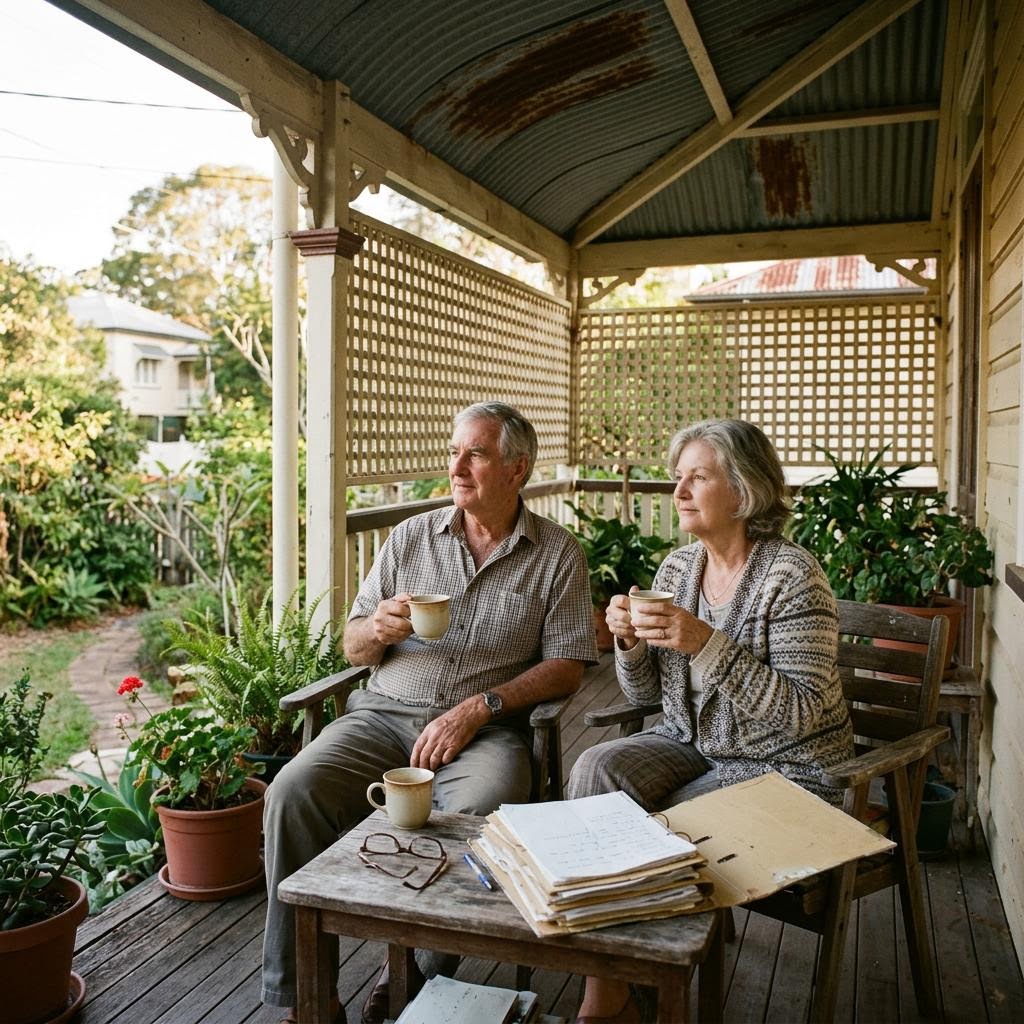
Based on a real discussion shared online by a retired homeowner researching reverse mortgages before making any decisions. Some personal details have been simplified while preserving the circumstances described.
The Story
George had reached the point where curiosity finally outweighed scepticism.
For years, he'd ignored advertisements about reverse mortgages.
"They can't be as simple as they sound," he'd tell friends.
Whenever someone mentioned them, he'd immediately assume there had to be a catch.
Then retirement changed.
His home had increased substantially in value over the previous two decades, but everyday living costs kept rising faster than he expected.
He wasn't struggling.
He was simply becoming more aware that nearly all of his wealth sat behind the front door.
One afternoon he decided to stop relying on television commercials and newspaper headlines.
Instead, he began searching online for people who had actually taken out reverse mortgages.
He wasn't looking for marketing.
He wanted honest experiences, especially from people who later regretted their decision.
What Actually Happened
The more George read, the more nuanced the discussion became.
Some homeowners described reverse mortgages as one of the reasons they had been able to remain in their homes throughout retirement.
Others explained why they had decided against one after comparing different options.
Several contributors admitted they had initially believed reverse mortgages were inherently risky until they spent time understanding how modern products worked.
Just as many people reminded readers that the loans were still loans.
Interest generally accumulated over time, reducing the remaining equity in the property.
The overall message surprised George.
He hadn't found a hidden catch.
He had found a financial product with clear advantages, clear trade-offs and very different outcomes depending on how people used it.
Original discussion:
https://www.reddit.com/r/personalfinance/comments/16m5q8l/what_is_the_catch_with_reverse_mortgages/
Why They Made That Choice
George hadn't decided to take out a reverse mortgage.
He'd decided to understand one.
He believed that if he was ever going to make a decision involving the largest asset he owned, it deserved more than assumptions or second-hand opinions.
Reading real experiences gave him a broader perspective than advertising ever could.
Lessons Learned
Several consistent themes emerged throughout the discussion.
Understanding removes much of the uncertainty. Many contributors said their opinions became more balanced once they understood how reverse mortgages actually worked.
Every benefit has a corresponding trade-off. Greater access to home equity generally means less equity remains later unless repayments are made.
The homeowner's objectives matter. The same loan may suit one retiree well and be completely inappropriate for another.
Research before deciding. Contributors repeatedly encouraged reading loan documents carefully, asking questions and comparing alternatives before making any commitment.
What Other People Thought
The discussion avoided extreme opinions.
Some people described reverse mortgages positively because they had solved a genuine retirement challenge.
Others preferred downsizing, relying on savings or leaving their home equity untouched.
One idea appeared throughout the conversation.
Reverse mortgages are easiest to evaluate once homeowners clearly understand both what they provide and what they cost over time.
That understanding helped people make decisions based on facts rather than assumptions.
How This Compares to Australia
Australians researching reverse mortgages often ask similar questions before deciding whether the product is appropriate for their circumstances.
Australian reverse mortgages are regulated under the National Consumer Credit Protection framework and eligible loans include a statutory No Negative Equity Guarantee.
Borrowers generally continue owning their home while meeting the loan conditions, although interest usually compounds over time unless voluntary repayments are made.
Understanding both the product features and the long-term implications can help homeowners compare a reverse mortgage with other retirement strategies.
Key Takeaways
George's biggest discovery wasn't whether reverse mortgages were good or bad.
It was that neither description told the full story.
Like many financial products, they made sense in some situations and less sense in others.
The important step wasn't accepting or rejecting the idea immediately.
It was understanding enough to ask better questions before making a decision.
Story Snapshot
Location: United States
Source: Reddit
Perspective: Retired homeowner
Stage: Researching a reverse mortgage
Primary reason being considered: Understand whether accessing home equity could support retirement if needed
Outcome: Unresolved
Biggest concern: Whether there was a hidden downside that outweighed the apparent benefits.
Key lesson: Taking time to understand how a reverse mortgage works can help homeowners replace assumptions with informed questions and compare it fairly with other retirement options.
Source