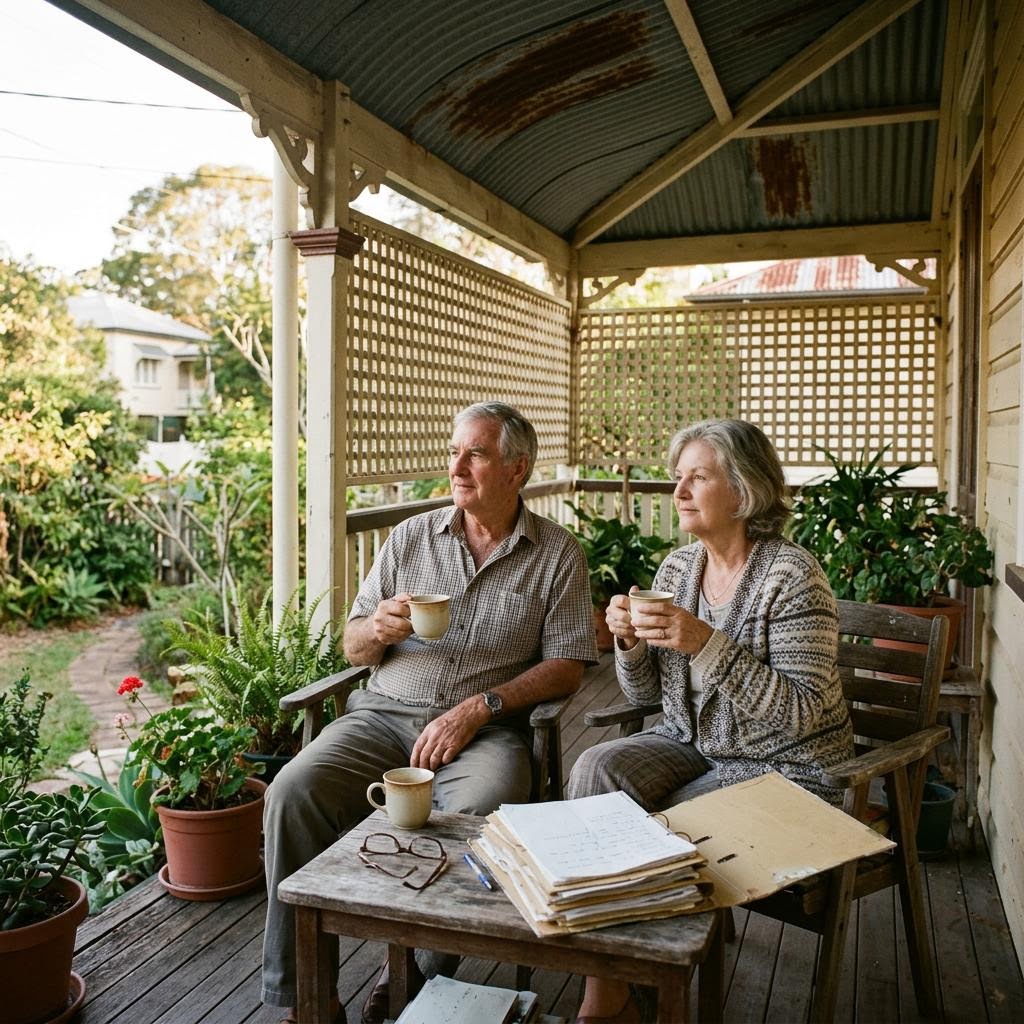
Based on a real discussion shared online by a retired couple who were surprised that owning their home outright didn't automatically make retirement feel financially comfortable. Some personal details have been simplified while preserving the circumstances described.
The Story
For years, Alan and Denise had counted down to one milestone.
The final mortgage repayment.
When it finally happened, they celebrated.
They imagined life would immediately feel easier.
In some ways, it did.
There was one less monthly bill.
But over the next few years, something unexpected happened.
Electricity costs climbed.
Insurance premiums increased.
Council rates kept rising.
The house itself seemed to develop an endless list of maintenance jobs.
One evening, Denise looked across the dining table.
"Have you noticed we still hesitate before spending money?"
Alan nodded.
The mortgage was gone.
The financial pressure wasn't.
Most of their wealth remained tied up in the family home, while their retirement income covered everyday expenses with very little left over.
Curious whether other retirees had experienced the same feeling, Alan joined an online discussion about reverse mortgages and retirement planning.
What Actually Happened
The responses were immediate.
Many contributors said they had expected paying off their mortgage to eliminate financial stress entirely.
Instead, retirement introduced a different set of expenses.
Some homeowners explained they had downsized to reduce ongoing costs.
Others described researching reverse mortgages because they wanted to access some of the equity they had spent decades building without immediately leaving their home.
Several contributors said the biggest surprise wasn't the cost of retirement.
It was discovering that being debt free didn't necessarily mean feeling financially flexible.
The discussion wasn't about whether one option was better than another.
It was about recognising that retirement often looks different from the way people imagine it decades earlier.
Original discussion:
https://www.reddit.com/r/retirement/comments/mortgage_paid_off_but_still_cash_flow_challenges/
Why They Made That Choice
Alan and Denise weren't looking for more income because they had overspent.
They wanted more flexibility.
Owning their home outright had given them security.
Now they wanted to understand whether that same home might also help support the retirement they had planned for.
Researching a reverse mortgage became one way of understanding how home equity might fit into that conversation.
Lessons Learned
Several themes appeared throughout the discussion.
Owning a home outright doesn't remove every financial challenge. Retirement expenses continue long after the mortgage ends.
Cash flow and wealth aren't the same thing. Many retirees described being comfortable on paper while still feeling cautious with everyday spending.
Retirement planning evolves. The strategies that helped build wealth may differ from those used to manage retirement.
Every option deserves comparison. Contributors discussed downsizing, adjusting spending, accessing home equity and other approaches depending on their circumstances.
What Other People Thought
Many retirees related to Alan and Denise's experience.
Some had downsized and appreciated the lower ongoing costs.
Others preferred remaining in their home and exploring ways to improve financial flexibility.
A consistent message emerged throughout the discussion.
Owning a valuable home provides choices, but every choice comes with different financial and lifestyle considerations.
How This Compares to Australia
Many Australian retirees also discover that paying off their home is an important milestone rather than the end of financial planning.
For eligible homeowners, a reverse mortgage is one option that may allow access to part of the equity in the home while continuing to live there.
Australian reverse mortgages are regulated under the National Consumer Credit Protection framework, and eligible loans include a statutory No Negative Equity Guarantee.
Because interest generally compounds over time unless voluntary repayments are made, homeowners often compare this approach with alternatives such as downsizing or drawing on other assets before making a decision.
Key Takeaways
Alan and Denise achieved the goal they had worked towards for decades.
They became mortgage free.
What surprised them was discovering that financial security and financial flexibility aren't always the same thing.
Their research wasn't driven by crisis.
It was driven by curiosity.
Understanding what role, if any, their home equity could play in retirement became another step in planning for the years ahead.
Story Snapshot
Location: United States
Source: Reddit
Perspective: Retired couple
Stage: Researching retirement options
Primary reason being considered: Improve financial flexibility despite owning the family home outright
Outcome: Unresolved
Biggest concern: Feeling asset rich but having limited cash flow for ongoing retirement expenses.
Key lesson: Paying off the family home is a major milestone, but many retirees continue reviewing how best to balance home equity, retirement income and future financial flexibility.
Source