Clear information. Honest answers about reverse mortgages.

Call 1300 038 633
Reverse Loans
Size
Mixed outcomealso negativealso positive

"Mum Says It's Her House." We're Still Trying to Work Out Whether That's the End of the Conversation.

I'd always assumed it would eventually become part of the family…

4 minute read · Published 8 April 2026

Verified by the Reverse Loans editorial team

The story

Based on a real discussion among Generation X homeowners whose parents were considering or had already taken out reverse mortgages. The conversation explored ageing in place, inheritance expectations and whether using home equity during retirement was justified. Some personal details have been simplified while preserving the themes discussed.


The Story

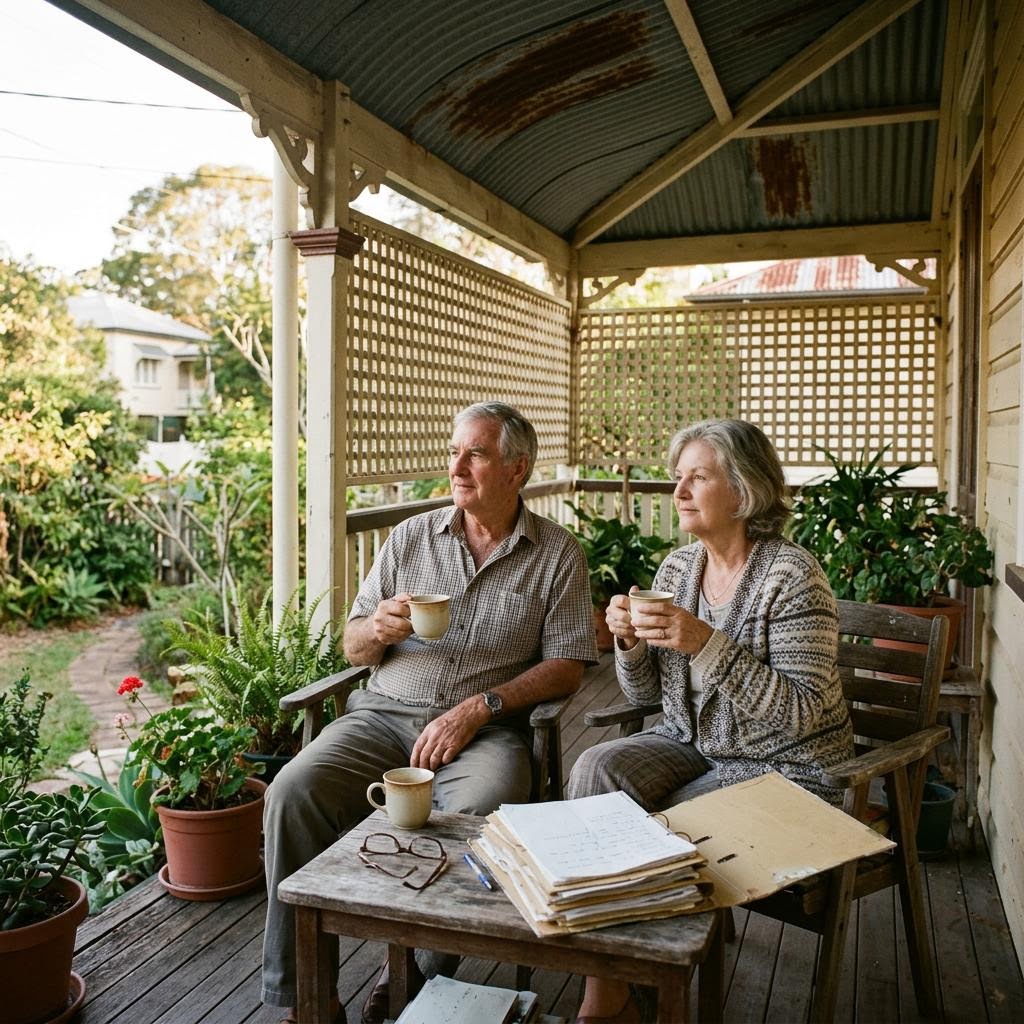
When Mum first mentioned a reverse mortgage, I wasn't worried about the paperwork.

I was worried about what it meant.

She'd spent forty years paying off that house.

I'd always assumed it would eventually become part of the family estate.

Then she said something I'd never really considered.

"I didn't spend my whole life paying for this place so I could leave it to everyone else."

"I paid for it so I could live in it."

That single sentence changed the conversation.

Instead of arguing about interest rates and loan balances, our family found ourselves discussing something much bigger.

Who was the home really for?


What Actually Happened

The discussion attracted a wide range of responses from Generation X users whose parents had either considered or already taken out reverse mortgages.

Many commenters said their parents viewed the family home as a resource that should improve their own retirement rather than simply maximise an inheritance.

Several adult children admitted they had initially struggled with that idea.

Others said their perspective changed after watching ageing parents remain comfortably in their own homes instead of feeling pressured to sell.

Some contributors shared positive family experiences where reverse mortgages allowed parents to age in place with greater financial security.

Others remained cautious, pointing out that compound interest could substantially reduce the remaining equity over time.

A recurring theme emerged throughout the discussion.

Parents and children were often working towards different goals.

Parents wanted independence.

Children sometimes focused on preserving the estate.

Neither viewpoint was necessarily wrong.

They were simply different.


Why They Made That Choice

For many of the parents discussed, the decision wasn't driven by a desire to borrow.

It was driven by a desire to stay.

Remaining in familiar surroundings, close to neighbours, friends and established routines, often mattered more than preserving every dollar of equity for the future.

Many contributors felt that if home equity could improve retirement, that was exactly what it had been built for.


Lessons Learned

Several themes appeared consistently throughout the discussion.

Parents and children often view home equity differently. One generation may prioritise independence while the other naturally thinks about inheritance.

Ageing in place has real value. Many contributors believed remaining in a familiar home improved quality of life, even if it reduced future equity.

Open conversations prevent misunderstandings. Families who discussed expectations early generally reported less conflict later.

There isn't a single correct answer. The best approach depended on each family's financial circumstances, relationships and priorities.


What Other People Thought

The discussion was thoughtful rather than argumentative.

Many Generation X contributors admitted they had reconsidered their own assumptions after hearing their parents explain why remaining in the family home mattered so much.

Others said they would personally make different financial decisions.

Most agreed that parents deserved the opportunity to use their own assets in a way that supported the retirement they wanted, provided they fully understood the long-term consequences.


How This Compares to Australia

The same conversations occur regularly in Australian families.

Many retirees see the family home as both somewhere to live and a significant financial asset.

For eligible homeowners, a reverse mortgage may allow access to part of that equity while remaining in the home.

Australian reverse mortgages are regulated under the National Consumer Credit Protection Act and include a statutory No Negative Equity Guarantee.

Families are often encouraged to discuss retirement funding decisions together before any long-term commitment is made so that expectations around future inheritance are understood by everyone involved.


Key Takeaways

The discussion wasn't really about reverse mortgages.

It was about expectations.

Parents often see their home as something they spent a lifetime earning the right to enjoy.

Children sometimes see the same home as part of the family's future wealth.

Neither perspective is automatically right or wrong.

The most successful families in the discussion were simply the ones who talked about those expectations before decisions were made.


Story Snapshot

Location: United States

Source: Reddit

Perspective: Generation X adult children and homeowners

Stage: Family discussion before a reverse mortgage

Primary reason being considered: Balance ageing in place with the effect on future inheritance

Outcome: Mixed

Biggest concern: Whether parents should prioritise enjoying their retirement or preserving home equity for the next generation.

Key lesson: Reverse mortgages often prompt broader family conversations about independence, inheritance and the purpose of home ownership in retirement. Clear communication can be just as important as understanding the financial product itself.


Source

What this means for you

One person's experience can't tell you what will happen to you, but it can show you which questions to ask.

Source

Every story is linked back to the original public discussion. Names and identifying details have been removed or changed.

Read the original discussion

Other experiences, other outcomes

Call 1300 038 633Request a call