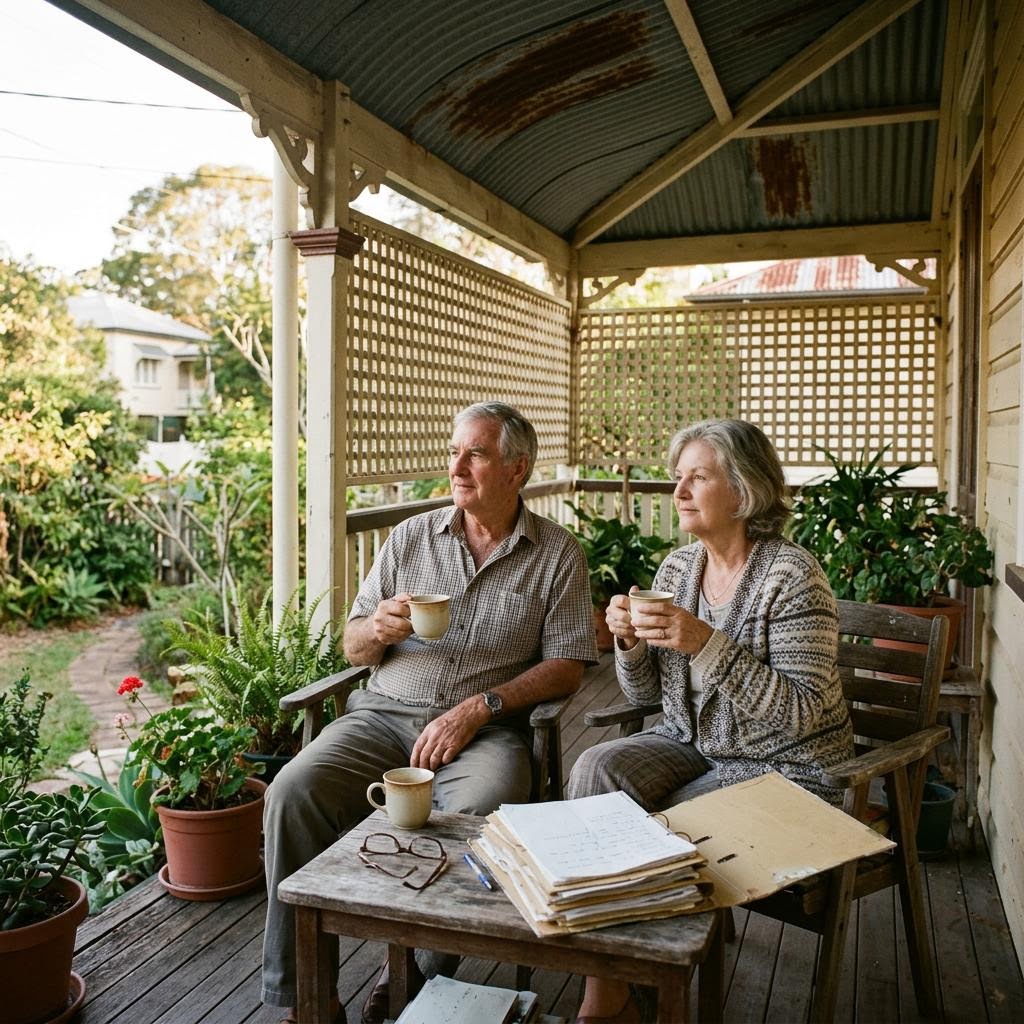
Based on a real discussion shared online by a retired homeowner discussing whether to use a reverse mortgage rather than relying on financial support from adult children. Some personal details have been simplified while preserving the circumstances described.
The Story
Margaret loved seeing her children every week.
What she didn't love was hearing the same question.
"Mum, are you sure you're managing?"
She always smiled.
"I'm fine."
The truth was a little more complicated.
She wasn't in financial hardship, but her retirement income had become tighter than she'd expected. Rising insurance premiums, council rates and maintenance on a forty-year-old home meant there wasn't much room for unexpected expenses.
Her children had started offering to help.
One offered to pay for repairs.
Another suggested sending money each month.
Margaret appreciated their generosity.
She also hated the idea.
"I've spent my whole life looking after myself," she said. "I'd like to keep doing that if I can."
While researching different retirement options, she came across discussions about reverse mortgages and wondered whether accessing some of the equity in her home might allow her to remain financially independent without relying on her family.
What Actually Happened
The online discussion revealed that many retirees wrestled with the same emotions.
Several contributors said their parents had deliberately avoided asking family for financial help because maintaining independence mattered deeply to them.
Others described parents who were comfortable accepting assistance, believing that families simply support one another through different stages of life.
A number of commenters encouraged Margaret to focus less on what other people thought and more on what outcome she hoped to achieve.
If remaining financially independent was important to her, then any option should be evaluated against that goal.
The discussion didn't conclude that a reverse mortgage was the right answer.
It concluded that understanding the purpose behind the decision was the most important starting point.
Original discussion:
https://www.reddit.com/r/retirement/comments/reverse_mortgage_or_family_support/
Why They Made That Choice
Margaret wasn't trying to avoid her children.
She was trying to preserve the relationship they already had.
She wanted family visits to remain about birthdays, grandchildren and Sunday lunches rather than conversations about unpaid bills.
Exploring a reverse mortgage wasn't about borrowing money for spending.
It was about understanding whether she could continue managing her own finances on her own terms.
Lessons Learned
Several themes appeared consistently throughout the discussion.
Financial independence means different things to different people. Some retirees value remaining completely self-sufficient, while others are comfortable accepting help from family.
Money and relationships are closely connected. Financial decisions can influence family dynamics as much as household budgets.
Understanding motivations matters. Contributors encouraged focusing on why a homeowner was considering a reverse mortgage before evaluating how it worked.
There is rarely only one solution. Reverse mortgages, family assistance, downsizing and other strategies each solve different problems.
What Other People Thought
Many contributors sympathised with Margaret's desire to remain independent.
Others shared stories where helping ageing parents financially had strengthened family relationships rather than creating tension.
One point appeared repeatedly throughout the discussion.
Every family has different expectations.
The most successful outcomes often came from having honest conversations before financial pressures forced difficult decisions.
How This Compares to Australia
Many Australian retirees place a high value on remaining financially independent while continuing to live in their own home.
For eligible homeowners, a reverse mortgage is one option that may provide access to home equity without requiring the immediate sale of the property.
Australian reverse mortgages are regulated under the National Consumer Credit Protection framework and eligible loans include a statutory No Negative Equity Guarantee.
Because every family's financial circumstances and relationships are different, homeowners often compare a reverse mortgage with other available options when considering how best to fund retirement.
Key Takeaways
Margaret wasn't choosing between borrowing money and accepting help.
She was deciding what independence meant to her.
The reverse mortgage wasn't the centre of the story.
Her desire to remain in control of her own retirement was.
For many families, understanding that motivation creates a far more constructive conversation than debating financial products alone.
Story Snapshot
Location: United States
Source: Reddit
Perspective: Retired homeowner
Stage: Considering a reverse mortgage
Primary reason being considered: Maintain financial independence while remaining in the family home
Outcome: Unresolved
Biggest concern: Whether to rely on adult children for financial support or access equity in the family home.
Key lesson: Retirement decisions are often influenced as much by personal values and family relationships as they are by financial calculations.
Source