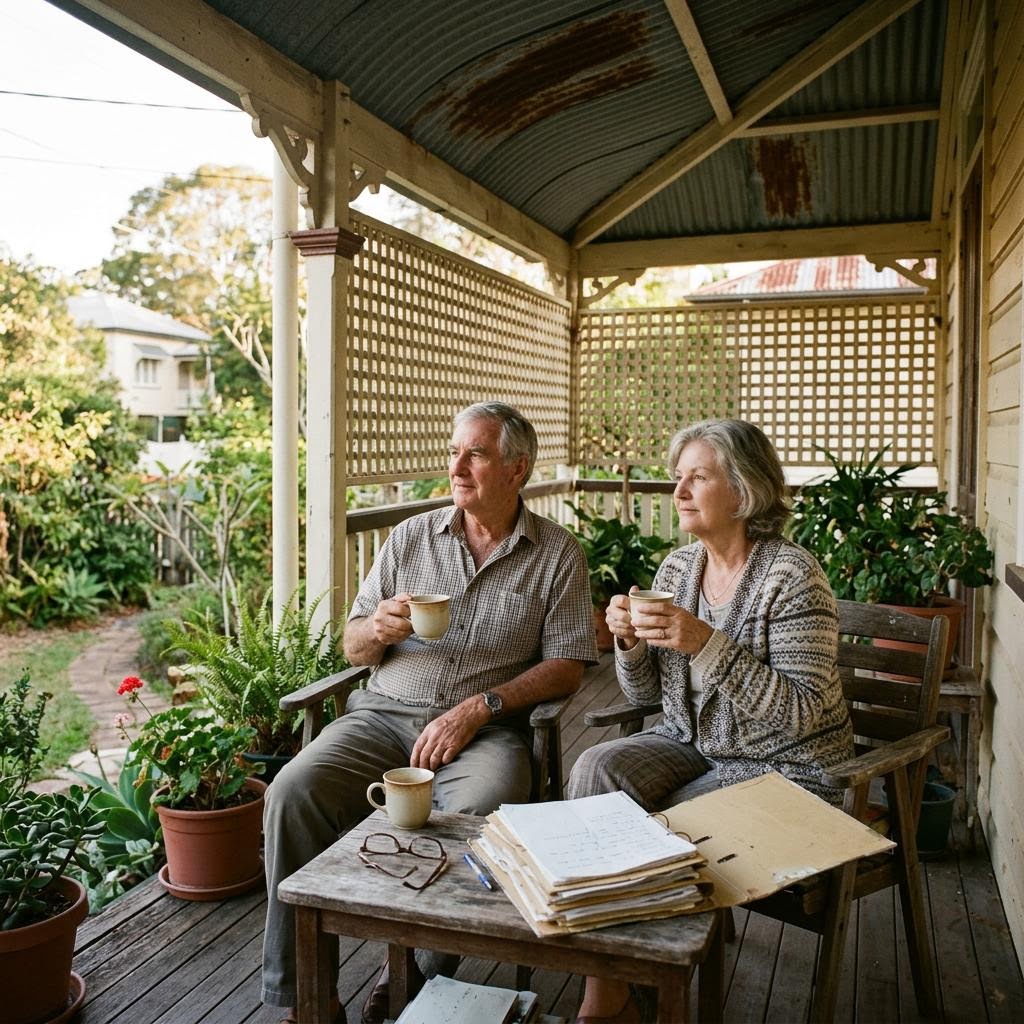
Based on a real discussion where homeowners, family members and industry professionals shared first-hand experiences with legitimate reverse mortgages, including both positive and negative outcomes. Some personal details have been simplified while preserving the circumstances described.
The Story
Whenever reverse mortgages came up in conversation, the opinions were immediate.
"They're a rip-off."
"You'll lose your house."
"They only benefit the bank."
After hearing the same warnings over and over, Robert began to wonder something.
"Does anyone actually have one?"
Not someone who had read about them.
Not someone repeating a story they'd heard years ago.
Someone who had actually signed the paperwork and lived with the loan.
He searched online and found a discussion asking exactly that.
"Do you know anyone who has gone into a legitimate reverse mortgage?"
The responses surprised him.
They weren't all positive.
They weren't all negative either.
Most were simply people explaining why they had chosen one, how it worked in practice and whether it achieved what they hoped.
What Actually Happened
The discussion quickly revealed that legitimate reverse mortgages had helped many older homeowners remain in their homes while improving their retirement cash flow.
Several contributors shared stories of parents or relatives who had used reverse mortgages successfully because they had limited retirement income but substantial home equity.
Others explained that their family members had no children or little interest in leaving an inheritance, making the decision much easier.
At the same time, several commenters warned that reverse mortgages weren't appropriate for every household.
The strongest caution came from contributors who felt borrowers had not fully understood how compound interest would affect the remaining equity over many years.
Rather than condemning the product itself, many participants concluded that the outcome depended largely on whether the borrower clearly understood both the benefits and the long-term trade-offs before signing.
Why They Made That Choice
The homeowners weren't looking for extra debt.
They were looking for greater financial security.
For some, the reverse mortgage allowed them to remain in the family home without selling.
For others, it funded home repairs, supplemented retirement income or reduced financial stress.
Many contributors said the loan worked because it matched their personal circumstances rather than because reverse mortgages were universally suitable.
Lessons Learned
Several themes appeared consistently throughout the discussion.
Real experiences were more balanced than public opinion. Few contributors described reverse mortgages as either completely good or completely bad.
Understanding compound interest mattered. Borrowers who understood how the loan balance would grow generally felt more comfortable with their decision.
Family goals influenced the outcome. Households focused on ageing in place often viewed reverse mortgages differently from those hoping to maximise an inheritance.
Legitimate products still require careful planning. Contributors repeatedly encouraged independent advice and careful comparison before committing.
What Other People Thought
The discussion included homeowners, adult children and people who had observed reverse mortgages within their extended families.
Some described them as an excellent retirement tool.
Others said they would only consider one if other options had been exhausted.
Most contributors agreed on one point.
A reverse mortgage should be judged according to the homeowner's circumstances rather than its reputation alone.
How This Compares to Australia
Australian reverse mortgages operate under a regulated framework that includes consumer protections such as the statutory
No Negative Equity Guarantee, meaning borrowers or their estates cannot owe more than the property's sale value, provided the loan complies with Australian law.
Research by ASIC has similarly found that many Australian borrowers use reverse mortgages to remain in their homes and improve retirement cash flow, while also highlighting the importance of understanding how interest compounds over time and how the loan may affect future home equity.
Key Takeaways
Robert expected to find another debate.
Instead, he found real experiences.
Some borrowers were delighted with their decision.
Others said they would have approached it differently.
The discussion reminded him that reverse mortgages aren't defined by their reputation.
They're defined by whether they fit the homeowner's financial goals, family circumstances and understanding of the long-term consequences.
Story Snapshot
Location: United States
Source: Reddit
Perspective: Homeowners, family members and observers
Stage: Researching reverse mortgages
Primary reason being considered: Understand whether legitimate reverse mortgages deliver positive real-world outcomes
Outcome: Mixed
Biggest concern: Whether reverse mortgages genuinely help retirees or simply create problems later.
Key lesson: First-hand experiences suggest reverse mortgages can work well when borrowers understand the product and it aligns with their retirement objectives. Like many financial products, the outcome often depends more on the individual's circumstances than the product itself.
Source