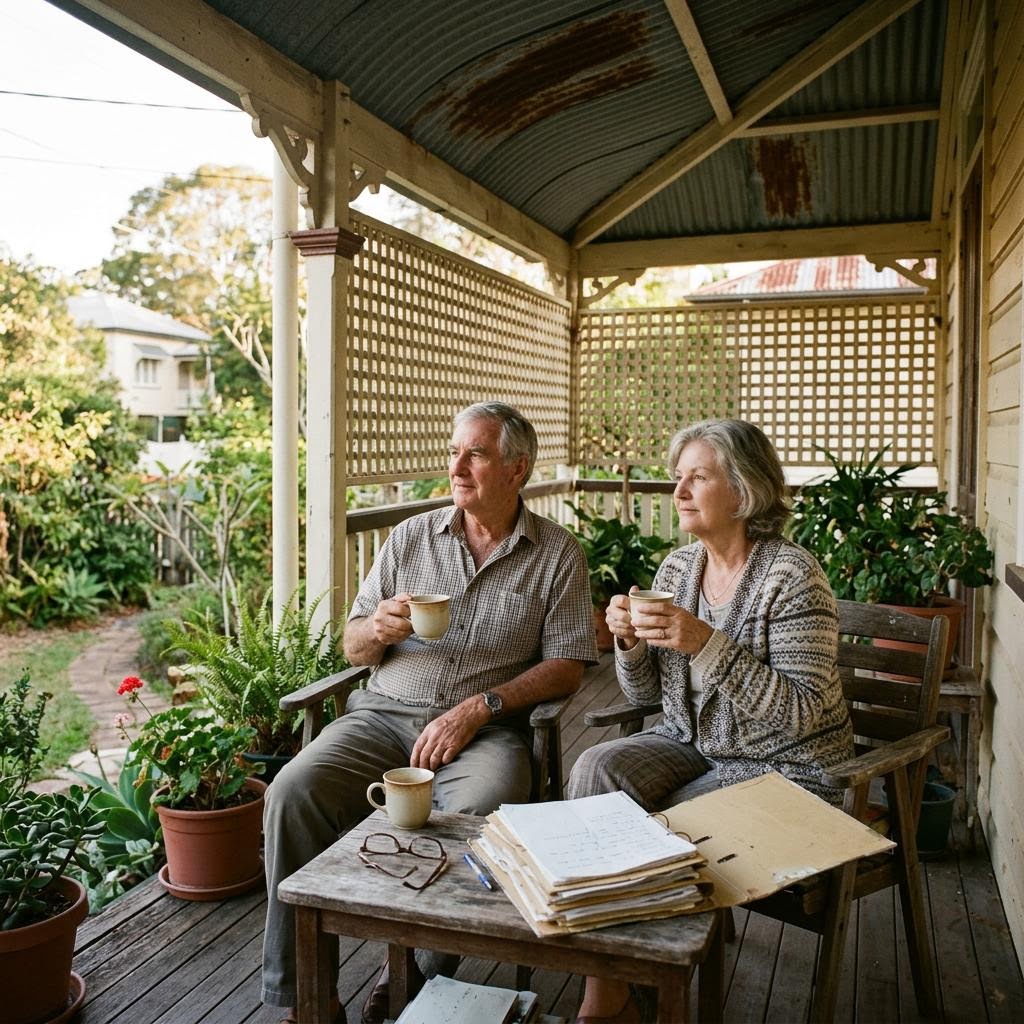
Based on a real discussion shared online by a family supporting a retiree through an unexpected financial setback. Some personal details have been simplified while preserving the circumstances described.
The Story
Dad had always planned carefully.
He'd retired with savings, owned his home outright and felt confident he could comfortably fund the years ahead.
Then everything seemed to happen at once.
A major home repair.
Unexpected medical expenses.
Investment returns that didn't match expectations.
Within twelve months, a retirement that once felt secure suddenly looked much tighter.
Friends began suggesting he sell the house.
His children wondered whether downsizing might now be inevitable.
Dad wasn't convinced.
"I've had one difficult year," he said.
"I don't want to make a permanent decision because of a temporary problem."
One evening, while researching alternatives, his daughter found an online discussion where retirees were talking about using reverse mortgages to improve cash flow without immediately selling their homes.
She shared it with the family.
What Actually Happened
The responses highlighted how differently retirees approached unexpected financial setbacks.
Some contributors explained they had downsized after deciding their long-term circumstances had genuinely changed.
Others said they wanted more time before making such a significant decision.
Several homeowners described reverse mortgages as providing flexibility during periods of uncertainty, allowing them to reassess their situation later rather than feeling pressured to act immediately.
Others reminded readers that borrowing against home equity wasn't appropriate for everyone and encouraged comparing all available options carefully.
The discussion wasn't about avoiding difficult decisions.
It was about avoiding rushed ones.
Original discussion:
https://www.reddit.com/r/retirement/comments/reverse_mortgage_after_unexpected_expenses/
Why They Made That Choice
Dad wasn't trying to preserve every dollar of equity.
He wanted to preserve choice.
Selling the family home was always available if circumstances required it.
He simply didn't want one difficult period to dictate the rest of his retirement before he had fully assessed his longer-term situation.
Exploring a reverse mortgage became part of that broader planning process.
Lessons Learned
Several themes appeared consistently throughout the discussion.
Short-term challenges don't always require permanent solutions. Many contributors encouraged taking time to understand whether financial pressures were temporary or ongoing.
Flexibility has value. Having more than one option available often reduced stress during uncertain periods.
Large retirement decisions deserve careful consideration. Selling a long-term home is rarely something contributors recommended doing in haste.
Review the whole picture. Retirement decisions often involve health, lifestyle, family and finances rather than any single issue.
What Other People Thought
Many contributors had experienced periods where retirement became more expensive than expected.
Some adjusted their budgets.
Some downsized.
Others explored ways of accessing home equity while remaining where they were.
Although the approaches varied, one message appeared repeatedly.
Retirement planning is rarely about finding one perfect solution.
It's about finding the approach that best fits the circumstances at the time.
How This Compares to Australia
Australian retirees can also experience unexpected changes in living costs, healthcare expenses or investment income.
For eligible homeowners, a reverse mortgage is one option that may provide access to part of the equity in their home while allowing them to continue living there.
Australian reverse mortgages are regulated under the National Consumer Credit Protection framework, and eligible loans include a statutory No Negative Equity Guarantee.
Because interest generally compounds over time unless voluntary repayments are made, homeowners often compare this option with alternatives before deciding how best to respond to changing financial circumstances.
Key Takeaways
Dad's family initially believed they needed an immediate answer.
The discussion helped them realise they first needed a better understanding of the problem.
One difficult year didn't automatically mean the family home had to be sold.
For some retirees, creating enough flexibility to make thoughtful decisions can be just as valuable as solving today's financial challenge.
Story Snapshot
Location: United States
Source: Reddit
Perspective: Adult child
Stage: Considering a reverse mortgage
Primary reason being considered: Improve financial flexibility after unexpected retirement expenses
Outcome: Unresolved
Biggest concern: Whether temporary financial pressures justified selling the family home.
Key lesson: Significant retirement decisions are often strongest when homeowners have enough flexibility to consider their long-term circumstances rather than reacting to short-term financial setbacks.
Source