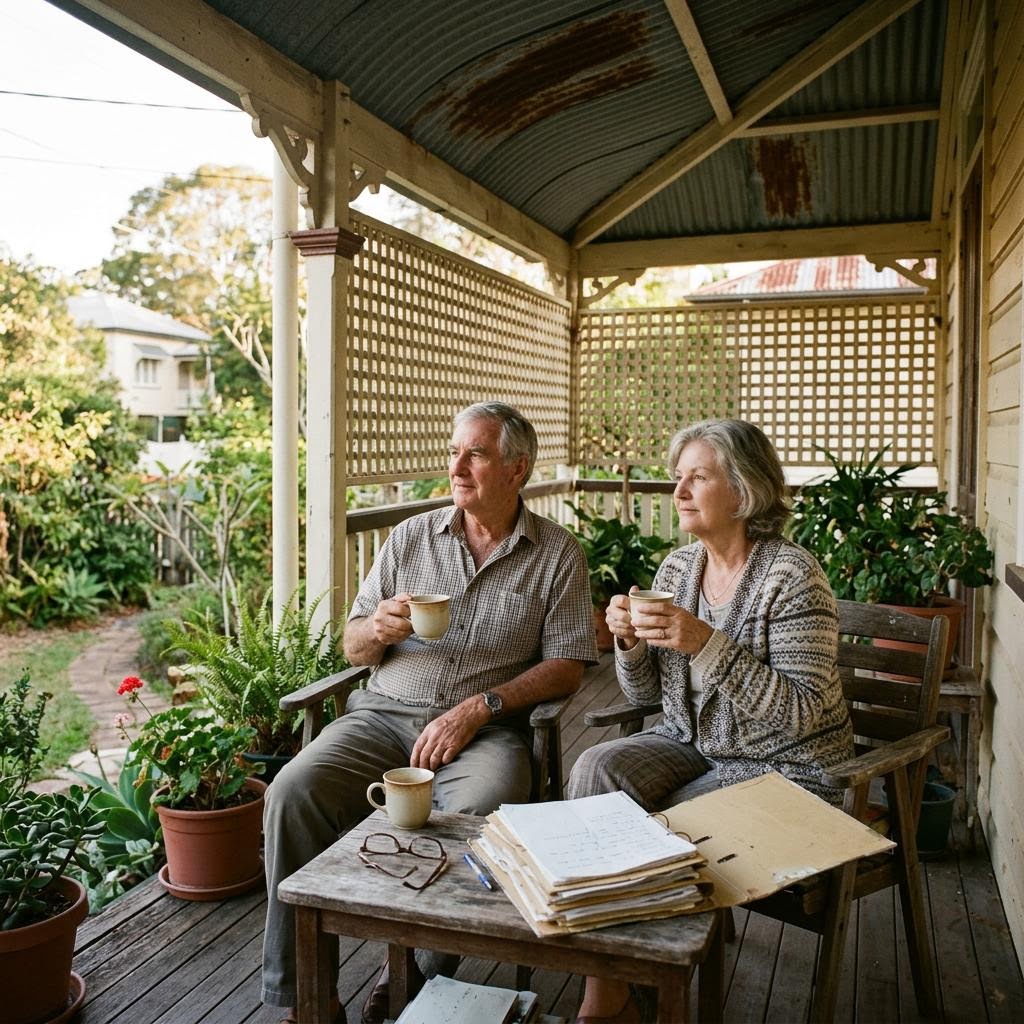
Based on a real Australian reverse mortgage case study. Some personal details have been simplified while preserving the circumstances and overall outcome described.
The Story
For most of their working lives, Margaret and David had done everything they thought they were supposed to do.
They paid off their home.
They contributed to their superannuation.
They avoided unnecessary debt.
By the time they retired, they believed they had prepared well.
Then life reminded them that retirement isn't always predictable.
David's health began to deteriorate. The home they loved suddenly needed modifications to make it safer. Everyday tasks became harder, and the couple wanted to stay together in the home they'd shared for nearly forty years rather than consider moving into aged care any earlier than necessary.
The renovations weren't extravagant.
Handrails.
A walk-in shower.
Safer flooring.
Better lighting.
Together, however, they represented a significant cost.
The money simply wasn't sitting in the bank.
Most of their wealth was locked inside the house itself.
What Actually Happened
After discussing several alternatives, Margaret and David explored a reverse mortgage.
Their goal wasn't to create additional retirement income or help family members.
They wanted to adapt their home so it remained suitable as they grew older.
The funds allowed them to complete the modifications without selling the property they loved.
The improvements also meant David could continue living safely at home while remaining close to family, neighbours and familiar healthcare providers.
For Margaret, the greatest benefit wasn't the renovation itself.
It was knowing they had bought themselves more time in the place that still felt like home.
Original case study:
https://www.heartlandbank.com.au/reverse-mortgages/reverse-mortgages-case-study
Why They Made That Choice
Moving was certainly an option.
Financially, it may even have made sense.
Emotionally, it felt like giving up far earlier than they were ready.
The house wasn't simply somewhere they lived.
It had gradually become part of the support network that surrounded them.
Their neighbours checked in regularly.
The local GP understood David's medical history.
Their children could visit easily.
The reverse mortgage became a way of adapting the home to changing circumstances rather than adapting their lives to a different home.
Lessons Learned
Several practical lessons emerge from this experience.
Retirement plans often evolve. The financial strategy that works at 65 may need adjusting by 75 or 80 as health and mobility change.
Home modifications can support independence. Many retirees choose to invest in making their homes safer rather than relocating immediately.
Housing decisions are rarely just financial. Familiar surroundings, healthcare access and community connections can be just as important as the property's market value.
Different uses of home equity solve different problems. In this case, the objective wasn't increasing lifestyle spending. It was making the existing home suitable for the years ahead.
What Other People Thought
Many readers recognised this situation immediately.
Several had watched parents or grandparents face similar decisions after illness or reduced mobility.
Some believed downsizing remained the better financial choice.
Others pointed out that moving house can itself be physically demanding, emotionally exhausting and expensive.
A recurring theme emerged throughout the discussion.
Sometimes the most valuable home improvement isn't one that increases resale value.
It's one that allows someone to continue living safely in their own home.
How This Compares to Australia
Using home equity to fund home modifications is an established reason some Australians consider a reverse mortgage.
Common improvements include accessibility renovations, bathroom upgrades, ramps, improved lighting and other changes that may help support independent living.
Australian reverse mortgages generally allow homeowners to remain in their property while accessing part of its equity, provided they continue to meet the loan conditions.
Eligible loans also include a statutory No Negative Equity Guarantee.
Interest generally compounds over time, so homeowners often consider how much equity they wish to access and how that decision may affect the remaining value of the property over the longer term.
Key Takeaways
Margaret and David weren't trying to buy a better house.
They were trying to make their existing one work for the next stage of life.
The reverse mortgage became a practical tool for adapting to changing circumstances without immediately leaving a community they valued.
Their story is a reminder that retirement planning doesn't stop on the day someone leaves the workforce.
As life changes, the way people use the assets they've built may change too.
Story Snapshot
Location: Australia
Source: Heartland Bank
Perspective: Retired homeowners
Stage: Reverse mortgage established
Primary reason for the loan: Fund home modifications to support ageing in place
Outcome: Positive
Biggest concern: Remaining safely in the family home as health needs changed
Key lesson: For some homeowners, accessing home equity is used to adapt an existing home to changing needs rather than moving somewhere new.
Source