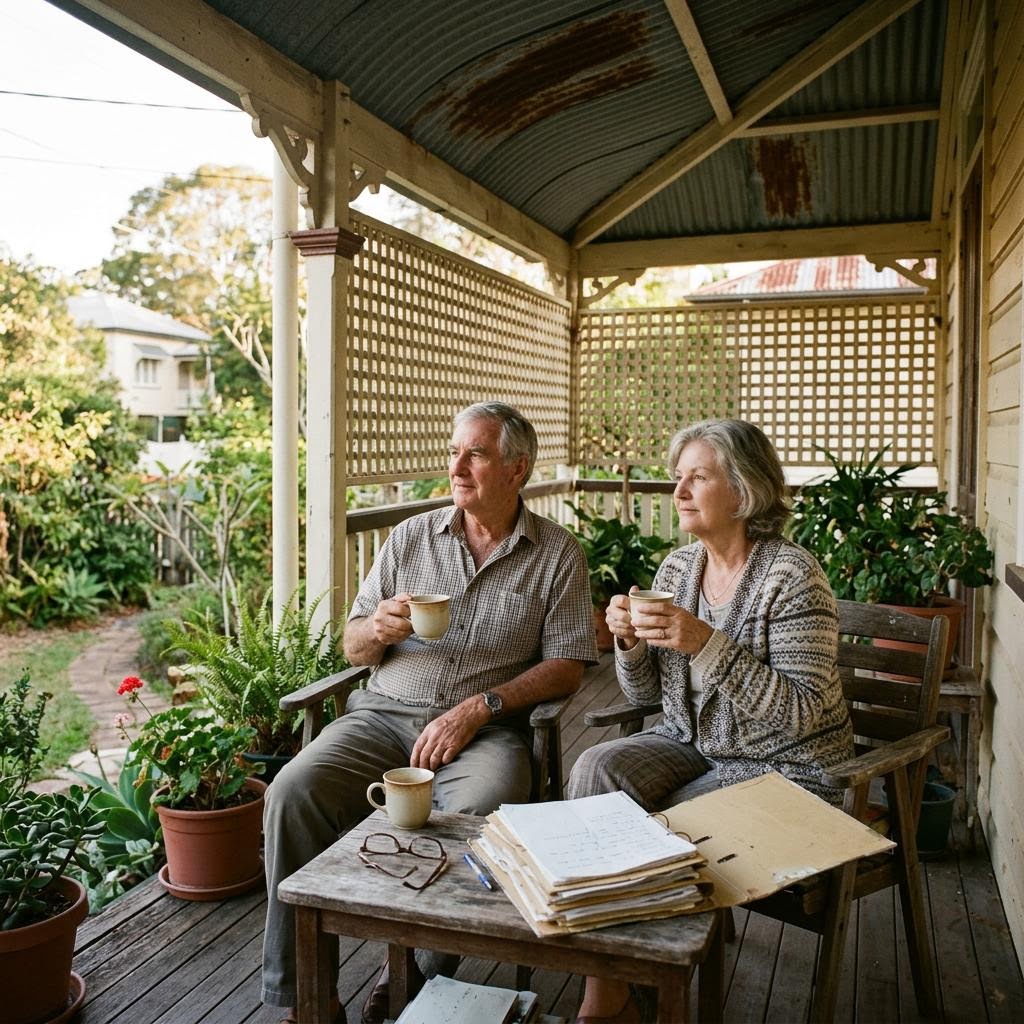
Based on a real discussion shared online by the family of an elderly homeowner who had used a reverse mortgage during retirement. Some personal details have been simplified while preserving the circumstances described.
The Story
When their father first mentioned taking out a reverse mortgage, his children were uneasy.
They'd heard the warnings.
The loan balance would grow.
There would be less equity left in the house.
It might reduce their inheritance.
Dad listened to every concern.
Then he quietly explained why he was considering it.
"I don't want a bigger house."
"I don't want a nicer car."
"I just want to stay here."
He had lived in the same neighbourhood for almost forty years.
His closest friends were nearby.
His GP knew his medical history.
He could walk to the local shops, the bowling club and the café where everyone greeted him by name.
Moving wasn't simply changing addresses.
It meant leaving the life he'd built.
After weighing up his options, he chose the reverse mortgage.
The family accepted his decision, although some remained uncertain whether it would prove worthwhile.
What Actually Happened
Dad stayed in his home for another eight years.
His retirement wasn't luxurious, but it was comfortable.
The reverse mortgage gave him enough financial flexibility to cover several unexpected expenses without selling the property.
When he eventually passed away, the family began sorting through the estate.
The remaining equity in the home was lower than it would have been without the reverse mortgage.
Nobody was surprised.
They had understood that possibility from the beginning.
What surprised them was something else.
Looking back, none of the children wished he had sold the house years earlier.
Several people responding to a similar online discussion shared comparable experiences.
They acknowledged that the estate was smaller than it otherwise might have been, but many also felt their parent had enjoyed a better quality of life because they had remained in familiar surroundings.
Original discussion:
https://www.reddit.com/r/personalfinance/comments/vq0lzt/looking_back_reverse_mortgage_was_the_right_choice/
Why They Made That Choice
Dad's decision wasn't driven by a desire to maximise wealth.
It was driven by a desire to maximise independence.
He understood there would probably be less equity remaining later.
He believed the trade-off was worthwhile if it allowed him to continue living where he felt happiest.
For him, the value of the house wasn't measured solely in dollars.
It was measured in the life it allowed him to continue living.
Lessons Learned
Several consistent themes emerged from the discussion.
Understanding the trade-offs made later decisions easier. The family had realistic expectations about how the loan would affect future equity.
Quality of life has value. Many contributors believed remaining in a familiar community became increasingly important as people aged.
Clear communication reduced future conflict. Because the family had discussed the decision openly from the beginning, there were fewer misunderstandings later.
Retirement goals differ between families. What feels like the right balance between lifestyle and preserving wealth will vary from one household to another.
What Other People Thought
Many contributors reflected on similar experiences with ageing parents.
Some believed their parents had made the right decision because they enjoyed greater independence throughout retirement.
Others said they would have preferred different approaches, such as downsizing earlier.
Despite those differing opinions, there was broad agreement on one point.
When homeowners understand how a reverse mortgage works and use it for a clearly defined purpose, families are often better prepared for the outcomes years later.
How This Compares to Australia
Australian homeowners also sometimes consider a reverse mortgage as a way to remain in their home while accessing part of the equity they have built over many years.
Eligible reverse mortgages include a statutory No Negative Equity Guarantee, and borrowers generally continue to own their home while they meet the loan conditions.
Interest generally compounds over time unless voluntary repayments are made, meaning the outstanding balance can increase over the life of the loan.
For many Australians, the decision involves balancing improved financial flexibility during retirement against the amount of equity they may wish to preserve for the future.
Key Takeaways
This family's perspective changed with time.
Initially, they focused on what the reverse mortgage might cost.
Years later, they reflected on what it had provided.
More time in the family home.
More years surrounded by friends and familiar places.
More independence during retirement.
Whether another family would make the same decision depends on their own priorities, but this experience shows why many discussions about reverse mortgages are ultimately about lifestyle rather than property values.
Story Snapshot
Location: United States
Source: Reddit
Perspective: Adult children reflecting after a parent's retirement
Stage: Reverse mortgage completed
Primary reason for the original loan: Remain in the family home during retirement
Outcome: Positive
Biggest concern: Whether the reduction in future home equity would outweigh the benefits of remaining at home.
Key lesson: Families who understand the long-term trade-offs of a reverse mortgage from the beginning are often better placed to evaluate the decision years later based on the homeowner's quality of life rather than the loan balance alone.
Source