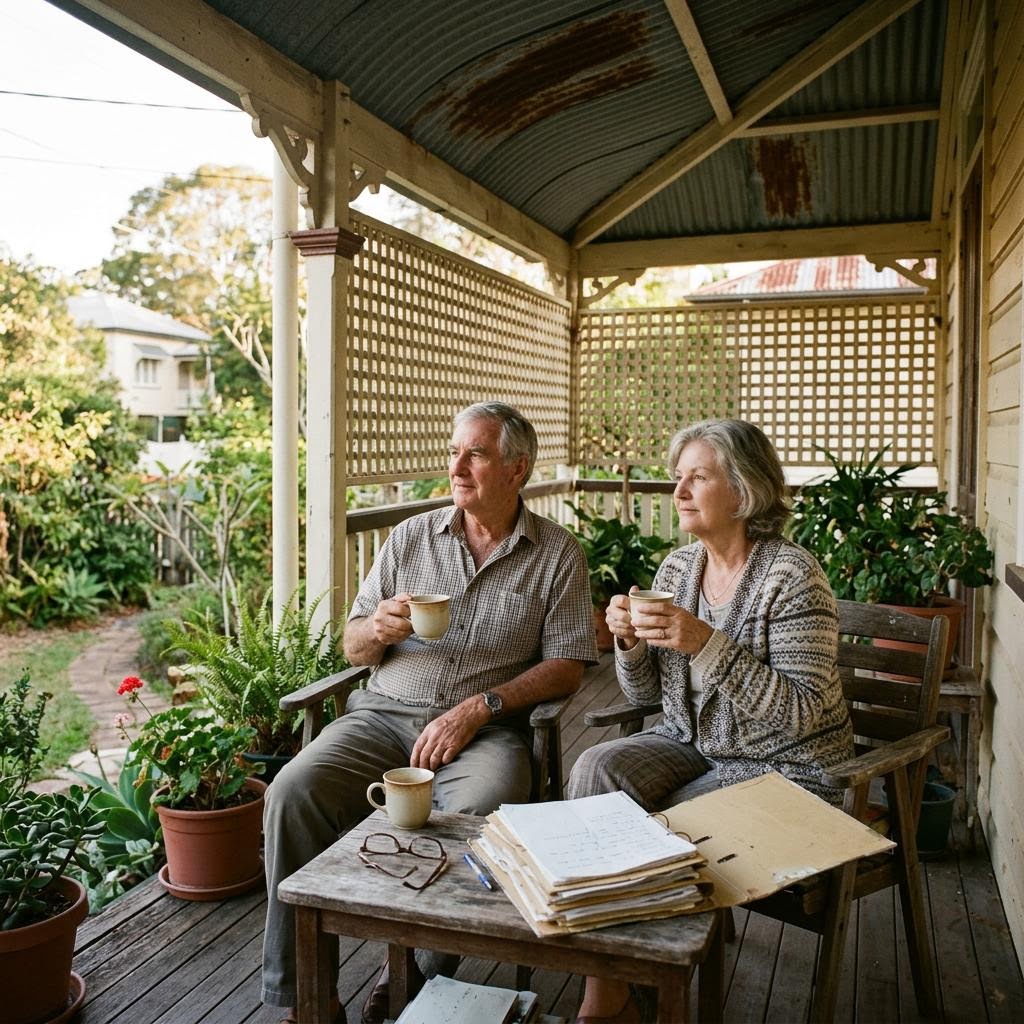
Based on a real discussion shared online by a retired homeowner who initially believed retirement meant either selling the family home or significantly reducing their lifestyle. Some personal details have been simplified while preserving the circumstances described.
The Story
Elaine had narrowed retirement down to two possibilities.
Stay in the family home and cut back on spending.
Or sell the home and enjoy a little more financial freedom somewhere smaller.
To her, those seemed like the only realistic choices.
Whenever friends talked about retirement, the conversation always came back to downsizing.
"You'll have to do it eventually."
She accepted that idea without really questioning it.
Then, during a local retirement seminar, someone asked a simple question.
"Have you looked at all the options?"
Elaine realised she hadn't.
She'd only been comparing two paths because they were the ones she heard about most often.
That evening she began reading discussions from other retirees who had explored a much wider range of retirement strategies.
What Actually Happened
The online discussion showed that many retirees started with similar assumptions.
Some ultimately downsized and were delighted with the decision.
Others remained in their homes after adjusting their spending or reviewing their investments.
Several contributors explained they had researched reverse mortgages because they wanted to understand whether accessing part of their home equity could allow them to remain where they were for longer.
Others considered renting, moving closer to family or redesigning parts of their home to support ageing in place.
The conversation wasn't about proving one approach was best.
It was about recognising there were often more choices than people initially realised.
Original discussion:
https://www.reddit.com/r/retirement/comments/more_than_two_retirement_options/
Why They Made That Choice
Elaine wasn't trying to avoid making a decision.
She simply wanted to make the right one.
Once she realised retirement wasn't limited to just two alternatives, she felt more comfortable exploring every option before deciding which best suited her goals.
Learning about reverse mortgages became part of understanding the broader picture rather than focusing on a single solution.
Lessons Learned
Several themes appeared throughout the discussion.
Retirement decisions are rarely either-or. Many contributors discovered additional options once they broadened their research.
Different strategies solve different problems. Housing, cash flow, lifestyle and family priorities all influence the right approach.
Understanding choices creates confidence. Contributors consistently reported feeling less anxious after learning about the full range of available options.
There is no universal retirement plan. What works well for one homeowner may not suit another.
What Other People Thought
Many retirees admitted they had originally viewed retirement housing as a simple choice between staying put or downsizing.
Others shared experiences that introduced entirely different possibilities.
Although contributors made different decisions, most agreed that learning about every available option helped them feel more confident before making long-term commitments.
How This Compares to Australia
Australian retirees also compare a variety of strategies when reviewing their retirement plans.
For eligible homeowners, a reverse mortgage is one option that may provide access to part of the equity in the home while allowing them to continue living there.
Australian reverse mortgages are regulated under the National Consumer Credit Protection framework and include a statutory No Negative Equity Guarantee.
Because interest generally compounds over time unless voluntary repayments are made, homeowners often compare reverse mortgages alongside downsizing, investment drawdowns and other retirement strategies before deciding which combination best supports their financial goals and preferred lifestyle.
Key Takeaways
Elaine's biggest discovery wasn't a financial product.
It was the realisation that she had more choices than she first believed.
Once she stopped viewing retirement as a decision between only two paths, planning became far less stressful.
Sometimes the hardest part of retirement planning isn't choosing an option.
It's discovering how many options you actually have.
Story Snapshot
Location: United States
Source: Reddit
Perspective: Retired homeowner
Stage: Comparing retirement strategies
Primary reason being considered: Explore alternatives before deciding whether to remain in the family home
Outcome: Positive
Biggest concern: Believing retirement required choosing between staying in the family home with a restricted lifestyle or selling it altogether.
Key lesson: Exploring a broader range of retirement strategies can reveal options that better balance financial flexibility, lifestyle and long-term goals.
Source